For a long time, I couldn’t decide which direction this blog should go… Should I focus on just travel or write anything about our lives? After my kid was born, I couldn’t even do my hobbies, let alone write something online. I missed it, so I decided let’s start with a new chapter, and let’s start from your town.
City of Dream, History… Vienna is really one of the most beautiful cities in the world, with tonnes of amenities and good living quality. Unfortunately, living here is not exactly like the people believe or think. When I look online, I realize most of the posts are too biased, good or bad. I will try to do something different and point out what you should really expect when you want to live in Vienna.
As a first step, our core topic starts with “Housing in Vienna.”.
Vienna has 23 districts. I believe the most convenient way is to split the city into 3 parts.
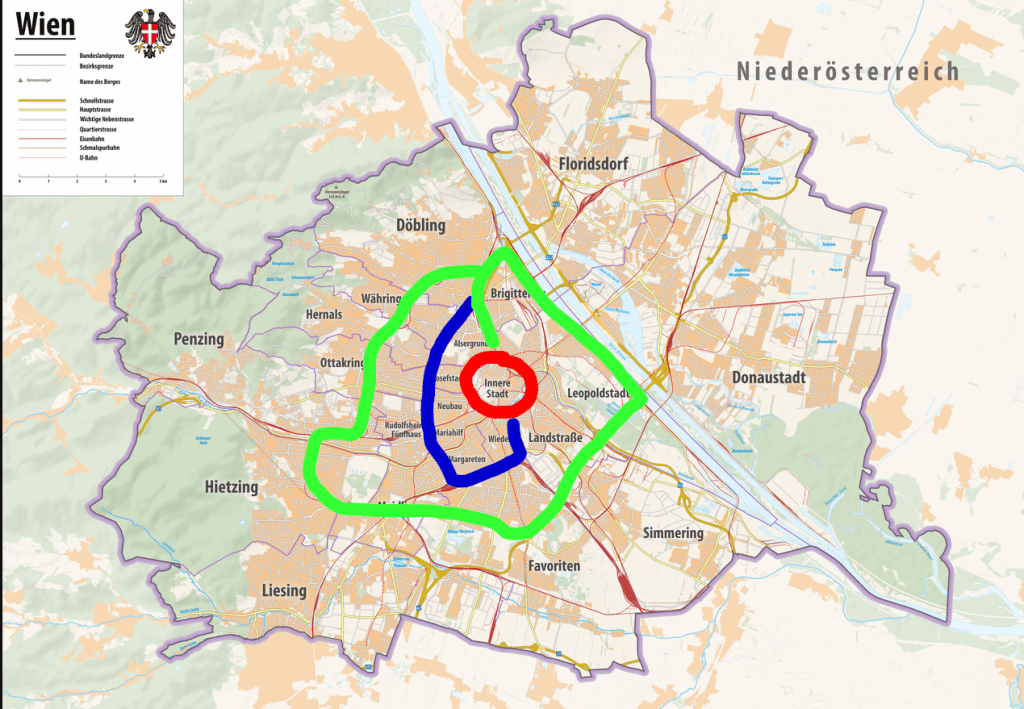
Core is 1. District aka Innere Stadt. Expensive, touristy, loud, and tonnes of attractions. Unless you have a spending addiction, just avoid it. It is easily reachable by every transportation choice provided by the City of Vienna.
The second ring is Gürtel, which covers 4, 5, 6, 7, 8, and 9 districts. Transportation options are great. You can find restaurants, pubs, and all kinds of events. Museums and everything you need are within 15 minutes by walk or tram. If you want to live in the city, this is a pricey part of the city. You can still feel this old scenery of Vienna.
3. The rest of the districts: Transportation options are getting limited if you are far from the main train stations. Yet, you are closer to the parks and the green side of the city. It is easy to find new buildings, and still most of the parts are in the developing stage.
Today our first topic will cover basics about the Vienna:
Safety is or was never an issue for Vienna, but it is also changing a little bit, e.g., 6. Mariahilf is getting more and more homeless district day by day or vice versa. 14. Is getting cleaner with new apartments and projects. People can complain about some districts, especially migrant-populated areas like Favoriten (10.) or 15. But in general, every district has several hot spots or streets to avoid, only at night. Again, if you have street awareness, you can mostly avoid the issues anytime.
Transportation: trams, metros, buses, bicycle roads. The city is providing too many options, especially inside of the green circle. You can handle anything easily without using a car.
Afterwards, it is a little bit tricky. If you don’t mind commuting several times per day for around 1 hour, there are also the same options. However, they are not ideal like the center. You might wait, walk, or need to change your option, depending on availability.
There are several parks inside the green area. If you really like hiking and walking in the forest, 13-19-23 especially offers the best spots in the city. If you are looking for restaurants and pubs, you can find many international places around the city. However, these places are mostly populated in the blue area.
I think this is good for the first step. The second chapter will cover housing: where to look, old scenery vs. modern buildings, and some tips for English speakers.
 Couple in the Milky Way
Leave a comment